THE BHARAT SCOUTS & GUIDES, NATIONAL TRAINING CENTRE
PACHMARHI ( M.P. ) – 461881.
HISTORY OF WOOD BADGE
The Wood Badge has been a most coveted achievement of a Scouter since the inception of the Scheme at Training for Scouters. It is treated as important and as respectful today as it was eighty years ago. This is actually so in regard to so many things introduced in Scouting by the Founder, for example the Patrol System, the Group System, Camping, the Badge work, the daily good turn and many other things. These are as relevant to day as they were ninety years ago when Scouting was started. Actually these are the specialties of our Movement, which make it distinct from so many youth programmes existing in the world today.
As is well known that the Scout Movement is the outcome of the experiment tried by the Founder in 1907 at Brown sea Island Camp for the training of boys in good citizenship where the scheme of Scouting a product of the Founder’s brain was tried by him. The Founder himself acted as the Scoutmaster to do in the case of a Scout Troop. The daily routine, the method of instruction through the Patrol Leaders, the Campfires were all done in the same manner. About the Patrol System, which is the only method of running a Scout Troop, the Founder stated in the report of his experimental camp as below.
“The patrol was the unit for work of play. The boys were put on their Honour to carry out orders. Responsibility, discipline and competitive rivalry were thus at once established and a good standard of development was ensured throughout the troop.
The patrol over night camps with the patrols away from the main camp on their own and under the leadership of their own boy leaders were of special concern to B.P. They were to show him whether one of the corner stones of his Boys Scouts Scheme – the Patrol system – was sound or not, whether it would be depended upon to work”. They talk of Micro teaching these days – but we know that B.P. introduced it years ago.
The experimental Camp proved the efficiency of his scheme. It was to be a school of training in citizenship through wood craft.
(a) This experimental Camp decided two things: that the scheme of ‘Scouting for Boys’ as evolved and experimented in this camp could be successfully implemented with boys; and
(a) That for the implementation of the scheme – an efficient Adult Leader, the Scoutmaster was needed. To improve the efficiency of the Scoutmaster, proper training was necessary. Years which followed strengthened this view.
The Founder started working of this and he developed the details of the training courses of Scoutmaster along lines he had laid down as early as 1913. It was to consist of three parts; a theoretical part covering the fundamental of Scouting as explained in his book ‘Aids to Scout mastership’, a practical part of a week in the camp; and as administrative part in the form of Scoutmaster’s performance in his own troop.
War having started in 1914; attention of B.P. and others was diverted to the more important work of services of the country by the Scouts. But B.P.’s thought turned frequently to the future welfare of Scouting when peace was attained. He realaised that, because of the different, and not always good way in which Scouting had come to be practised, some provision should have to be made for the training of the leaders, so that the enthusiasm of the boys was not damped by dull routine nor the value of personal leadership, W. de. Bois Maclaran, expressed his wish to donate a camping site easy of access to the Scouts of East London. The two met and agreed that a place should be sought for in order to provide both camping for Scouts and a Centre for the training of Scouters. Gilwell was found and acquired, much necessary work started and the place opened in 1919. Capt. Frances Gidney was appointed Camp Chief. He continued till 1923. Gilwell started as a Scoutmasters Training School and year by year expanded in scope.
The first Scoutmaster’s training course was held at Gilwell on 8th Sept. 1919. It followed the pattern B.P. had used with boys on Browne sea twelve years before. The patrol system was again put to test with the nineteen participants divided into patrols and living a patrol life. The instruction also to the same form as Browne sea. Each day a new subject was introduced and covered in demonstrations, practices and game. The Kudu Horn that had called the boys into action on Browne sea was used for all signals. B.P. laid it down that the training courses should run in a camp with the Scoutmaster forming a Scout troop or in the case of Cub master, a cub pack B.P. intended that as far as possible instruction is put into practice to make quite sure that the training of the boy is also kept very practical and very active.
What should these men be given as a token of having finished their training camp? The usual and obvious thing would be some kind of certificate but B.P. did not care for Certificate. He rummaged his trophies and Souvenir for suggestion and pulled out the long string of wooden beads he had found in Dinizuliu’s deserted hut in Ceza bush during the Zul War in 1888. He presented each man who had taken part in the camp with one of these beads.
These simple wooden Beads signifying the completion of the training course soon became one of the most highly prized possessions a Scoutmaster could want. The beads gave the training its name of Wood Badge Course.
As the number of courses all over the world increased, and as the stock of these beads in the necklace of Dinizule exhausted the Gilwell Park started preparing own beads for presentation to the Scouters.
It is satisfying to note that even though with the change of times, the Associations in various countries and also the World Bureau have brought about considerable change in the syllabus content and conduct of these courses, the Beads are still accepted as the insignia for these Scouters who complete this training.
It is also happy sign that in our country also after the formation of the Bharat Scouts & Guides in 1950, the Wood Badge (now named as the Himalaya Wood Badge) was retained as insignia for completion of Adult Leader Training and also as a symbol of unity in World Scouting, and our National Training Centre at Pachmarhi prepare and issue the beads from the wood available at the Centre itself.
The first cub master Wood Badge was held in 1927. Several complete specialist courses over shorter periods were held during the first fifteen years of the Gilwell life.
In 1924, policy changes as under took place in regard to training of Scouters as approved by the Founder.
(i) More emphasis was placed on Wood Badge Courses in the Provinces so as to make practical training more available i.e. policy of decentralization in training was adopted.
(ii) Emphasis was laid on the importance of preliminary or District Training, and also on the position of the District Commissioner as the Leader of his Scouts.
(iii) More stress was laid on the fact that Akela Leader (for cub training) and Deputy Camp Chief (for Scouts & Rover training) were members of the Gilwell Training Team and also on the value of combined.
Cooperative work. This resulted in the gradual development of the International Training Team. This was recognized by the 11th International Scout Conference in France in 1947.
In 1924, the Empire Jamboree at Webly brought 161 Scouters to Gilwell and 70 others distributed to other centres. Many training centres on the lines of Gilwell were conceived by men on these courses that had been specially appointed Deputy Camp Chiefs. It was a natural growth in the terms of the Founder.
Since 1919, a number of courses were held at Gilwell from India Col. Wilson and Sir Alfred Pickford attended a Wood Badge Courses in the summer of 1921. In February 1921, they conducted the first Wood Badge Course in Bengal. It is reported that in old Bombay Province Smt. A.C.Miller, the State Secretary after from Gilwell in 1921, November conducted Wood Badge Camp at Lonavala in 1922-23. Since 1923 after retirement from Bengal Police service, Col Wilson helped Scouting by running courses for Patrol Leaders and beginners in Scoutmastership as well as by holding Wood Badge Courses. In 1934, three courses Cub, Scout and Rover were held at Pachmarhi on the bank of the Lake near Pachmarhi Bazaar and in 1956, the M.P. Government made a grant of land in Pachmarhi for the establishment of the National Training Centre. This Provided a Most suitable place for Wood Badge Courses for the country.
Wood Badge Courses were also held at various other camping centres by D.C.Cs. and A.K.Ls. for states at Taradevi, Jodhpur, Jaipur, Seetlakhet, (UP), Bihar, Madras, AP, Bombay, Bengal etc. It is difficult to state in correct figures the number of such Wood Badge Courses held in the Country since the inception of the Movement in our Country and Wood Badge Scheme, but the National Training Centre have endeavored to maintain a record since the National Training Centre was founded at Pachmarhi in 1956. The records show a figure of 6789 Scouters having completed the Wood Badge in all the three Sections of the Movement. It must be admitted that the Wood Badge Scheme has attracted our Scouters and has inspired them for better work.
We all know that the Wood Badge – the beads of a Wood in a lace and the Parchment which accompanies it, is a symbol of the completion of the adult leader training and of unity of world Scouting. It is an insignia of a clan of Scouters who have dedicated themselves and have pledged for the service of the boys of the country by giving them better Scouting. We also know that it does not confer a degree or a status, which raises its recipient higher than the development of the Movement in the Country. On the other hand it is continuous reminder to the Scouter weaving the Wood Badge of the following:
(I) That he has undertaken to serve the boys under his care with efficiency, to give proper lead to them and that he has to continue his efforts to improve his efficiency as a Scouter.
(ii) That he has undertaken to give his leadership in a voluntary Movement in the humblest manner without any sense of age in him;
(iii) That he has undertaken to inspire his younger brother Scouters by setting his personal example of service with efficiency, discipline and fellowership of his leaders and;
(iv) That he has undertaken to strengthen his belief in the principles and methods of Scouting and to propagate it by living the Scout Promise and Law himself.
So during this celebrations of eighty years of Wood Badge let each one of us do a little introspection to find for ourselves how far we have gone to achieve these objectives and then let us pray to seek the blessings of God to give us the right direction to enable us to serve the children of our country through the Wood Badge training in a better manner than what we could do so far.
Tuesday, 23 April 2019
HISTORY OF WOODBADGE

Thursday, 17 January 2019
Advanced SM Trg Course Objectives
By the end of the course each Participant shall be able to:
*Recognise and Use Rules, APRO and other BOOKS on Scouting.
*Explain the Spiritual dimension of Training of Scouts.
*Explain about the Senior Boy and the Scout Troop.
*List out P.M. Shield Competition, CD Projects.
*Explain how to prepare for Rashtrapati Award.
*List out the Pravesh, Pratham Sopan and Dwitiya Sopan Tests & Skills involved in Tritiya Sopan and Rajyapuraskar.
*Demonstrate Observation, Sense Training, Nature Rambles, Woodcraft Expeditions.
*Explain the Use and Care of ROPE.
*Demonstrate Patrol Pioneering – advanced knowledge of pioneering.
*Demonstrate Camp Craft, Tent Pitching & List out simple Camp Tools.
*Demonstrate Night Scouting – Wide Games.
*Explain the Programme Planning, Planning Patrol and Troop Meetings, More ideas – including personal assignments to plan programmes.
*Explain the Expeditions, Outdoor activity and hiking and reporting.
*Conduct Over night Hike.
Explain how to prepare a Logbook for Proficiency Badges.
*List out the Skills upto Rajya Puraskar.
Friday, 14 September 2018
HOLISTIC knowledge of SCOUT MOVEMENT
STIC KNOWLEDGE OF THE SCOUT MOVEMENT
Scouting complements the school and the family, filling needs not met by either. Scouting develops self-knowledge and the need to explore, to discover and to want to know. Scouts discover the world beyond the classroom, tapping the skills of others to learn and to become individuals with all round development. Scouting helps young person's acquire plenty of life skills and enabels them to be useful citizens. Scouting is all about building confidence and self-esteem, learning important life skills and leadership skills, team building, outdoor adventure, education, and fun to empower the youth! Scouts learn how to make good choices and to take responsibility for their actions so that they are prepared for their adult life as independent persons.
Mission Statement of WOSM
The mission of Scouting is to contribute to the education of young people through a value system based on the Scout Promise and Law, to help build a better world where people are self-fulfilled as individuals and play a constructive role in society.
Scope for Personal Growth and Development
Through participation in outdoor activities like camps and hikes Scouts not only learn to be independent but also in the process to acquire skills in leadership and effective team work. They acquire skills in pioneering, first aid, cooking, mapping, signalling, observation etc. By participating in a wide variety of adventure programmes such as rock climbing, rafting, para sailinig etc., they not only have fun but also learn to strengthen their guts.
With several opportunities provided to serve the community at large by the Scout Movement, the Scouts and Guides get trained to be responsible citizens. This inspires young people to do their best and to always "BE PREPARED".
Saturday, 1 September 2018
GOWRI MANOHARI Paattum Naane
Gowrimanohari is the 23rd Melakartha which belongs to the fourth Chakra, the Veda Chakra. Dikshitar school had a different name called Guarivelavali for this raga. Gaurimanohari is a versatile raga which renders a very pleasing effect. The raga gives us unbridled joy and happiness. The raga expresses the feeling of Bhakthi and Sringara and it is an all time raga (sarvakaalika raga).
The meaning of the raga name is interpreted as Gauri(Goddess Parvathy) who steals the heart – (manohari means one who steals the heart). So Gaurimanohari means Gauri who steals the heart. Another version of meaning is ‘one that is as pleasant and beautiful as Gauri'(Manoharam- pleasing)
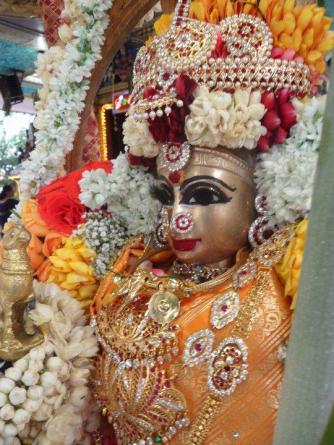
In Mind, body and soul Chakra – Chakra 4 is the Chakra where one’s self esteem as well as the control around and within one’s life rests.This raga is rich in prayogas that generate a state of well being or sowkhya bhava, decreases stress and tension, and induce peace and tranquility of mind.

Arohana : S R2 G2 M1 P D2 N3 S
Avarohana : S N3 D2 P M1 G2 R2 S
(Shadjam, Chathusruthi Rishabham, Sadharana Gandharam, Suddha Madhyamam, Panchamam, Chathusruthi Dhaivatham and Kakali Nishadam)
This is a sarva swara gamaka vaika rakthi raga. Pratyahata Gamakam (SN ND DP PM ..) lends colour to the raga. Gowri manohari is a Tri-stayi raga. The raga is very beautiful in all the sthayis.This raga expresses a feeling of proclamation or a raga that makes a statement.Swaras of Gowrimanohari undergo melodic gamaka when rendered with imagination. This is a bhava rich melodious raga.The sacred hymns Tevaram sung by Oduvars use this raga in abundance.
Jeeva Swaras and Nyasa Swaras : R and P
Graha Swaras : S, P and D
Murcchanakaraka Mela Raga : R, M and P through Graha Bhedam will Yield Natakapriya (10th mela), Vachaspathi (64th mela) and Charukesi(26th mela) respectively.
Sancharas/Prayogas
P, pm mg gr r,,- rgmpdns- dns,,- sn nd dp pm mg gr r- gmpdn – SRGR,,RGMGRS- SRGRSN dnSSnd-pmgrsr-rpmgr- srgrs- sndnsr..
Immortal Compositions
There are numerous compositions in Gowrimanohari. Sri Lakshman Ragde has estimated 134 carnatic krithis in this raga.Undoubtedly the famous composition Guruleka etuvanti by Saint Tyagaraja takes the first place.Both melodic and rhythmic contents are well balanced and the madhyamakala pace induces a unique thrill. The song Gowrimanohara by Papanasam Sivan is very soulful with mesmerizing melody. Dr.Balamuralikrishna’s composition Smarare is a majestic Gowrimanohari.The raga has wide expanse and is open for elaborate alapana. The krithi can be handled as a major item in a concert.
Tyagaraja Krithi – Guruleka – A Brief Commentary
In the krithi Guruleka Eduvanti, Tyagaraja has emphasised on the significance and importance of a mentor (Sadguru) in the success of life. The spiritual illumination won through the guru can counter the mental anguish caused by the attachment to wife and family – thanuvu, suta, dhana, dhaara, dhaayaadhi and bhaandavulu. According to Tyagaraja one can attain the state of pure mind and satvika bhava by the removal of ignorance in the mind. Only with the help of a Guru’s guidance this is possible. Thus this raga is aptly chosen by Tyagaraja to enlighten us that nobody can succeed without a guru’s grace.
Who is a Guru ?
The Guru Gita (verse 17) aptly describes the guru as “dispeller of darkness” (from gu, “darkness” and ru, “that which dispels”). So the literal meaning of the word Guru is one who eliminates darkness or one who enlightens.Guru is described as one without whom a meritorious person of any caliber remains in the dark. Guru clears the pollution of the mind. In association with a sishya, the Guru comes to know of the weak and strong points of his disciple. The strong points of the student would be highlighted and encouraged and the weak points would be carefully strengthened.Guru touches the mind of a student and transforms an illiterate into a scholar.
Major Krithis
A few are listed below.
Dayamado dayamado-Adi-Purandaradasa
Karunisu narahari -Adi-Purandaradasa
Palise ni enna shri mahalakshmi-Adi-Purandaradasa
Garuda gamana vasudeva -Rupaka Tyagaraja
Guruleka etuvanti -KhandaChapu- Tyagaraja
Pancha nadisha – Adi-Tyagaraja
Kaumari gaurivelavali- Adi-Muttusvami Dikshitar
Parashakti ishvari -Adi-Muttusvami Dikshitar
Sarasa sama mrdupada -Adi-Svati Tirunal
Gauri manohari pahi -Misra Jhampai-Jayachamaraja Odeyar
Devi gauri ninna -Jhampa-Muttiah Bhagavatar
Gauri manohara karunakara -Adi-Papanasham Shivan
Aparadhamulellanu-Adi-M.D.Ramanathan
Brova samayamide -AdiGarbhapurivasa
Arumillada tavamana -K/Chapu-Uttukadu Venkatasubbier
Bhima nadikkaraiyil- -Adi-Uttukadu Venkatasubbier
Pazhamo pazhamo pazham -Adi-Uttukadu Venkatasubbier
Tavam onrum ariyada -Adi-Uttukadu Venkatasubbier
Virundonru agudu -Adi-Uttukadu Venkatasubbier
Visati visati krishna-Adi-Uttukadu Venkatasubbier
Yarum iyalada tavamAna -K/Chapu-Uttukadu Venkatasubbier
Gauri manohari kamakshi-Adi-Mangalam Ganapati
Narayani bhaktajana -Adi-Mangalam Ganapati
Pada malar paninden -Adi-Mangalam Ganapati
Brovavamma shri chamundi-Trisra Rupaka-Mysore Vasudevacharya
Varalakshmi namostute – Rupakam-Mysore Vasudevacharya
Jagattinai padaitta-Adi-Periasami Tooran
Nenjame ni anjade ini-Adi-Periasami Tooran
Un namam un peccu-Adi-Periasami Tooran
Gauri manohariye -Adi-Shuddhananda Bharati
Oridam tarayo parama-Adi-Shuddhananda Bharati
Ponnana tirumukhattil-Jhampa-Shuddhananda Bharati
Anbu mayamana ambike undan Adi Rukmini Ramani
Aruviyum perugida arum gitam Eka Rukmini Ramani
Gauri manohari parashiva shankari Adi Rukmini Ramani
Nalla neram vallaiya shollaiya K/Chapu Rukmini Ramani
Tani oruvanai ni ninrayo Adi Rukmini Ramani
Favourite Filmy Raga
This is a popular raga in the filmy spectrum.When Gowrimanohari is mentioned, the song that comes to my mind is the evergreen hit Paattum Naane in the film Thiruvilayaadal sung by the immortal T.M.Soundararajan. Who can sing this with such bhava other than the legend himself ? One never gets bored even if the song is repeatedly heard or watched for quite a number of times. This famous song stars Nadigar Thilagam Sivaji Ganesan(another legendary actor par excellence) who acts as Lord Parameswara. Listen to the lyrics. It starts “Paattum Naane Bhaavavum Naane”…. which is a statement/proclamation by Lord Siva that HE is Nada and HE is the Bhava. The music director K.V.Mahadevan has brought out the melodic entity of this beautiful song with all the signature phrases and prayogas in this raga.Or it can be said that this song is an encyclopedia or primer about this raga-Gowrimanohari. The music is an all time favourite and ever green hit. That is the sort of effect K V Mahadevan leaves behind.
I think this is one of the favourite ragas of Isaijnani Illayaraja. He has composed numerous songs in this raga which are high in melodic content and brings out the raga swaroopa quite well.
Illayaraja hits
Jnaan jnaan paadaNum- PoonthaLir-Jency.
Dooraththil naan kaNda-NizhalgaL-Janaki
Kannan naaLum-ILamaikolam-Janaki
BhoopaLam isaikkum-Thooral ninnu pochu-Yesudass,Uma RamaNan(goes to Charukesi in the last line of the CharaNam)
Sandana kaatre-Thanikkattu Raja-SPB, Janaki (beautifully transcends to ShankarabharaNam in the third line of the charaNams and goes back to Gowrimanohari)
Solaippovil maalai thendRal-VeLLai Roja-SPB, Janaki
Ponvaanam thaNNeer thoovudhu- IndRu nee naaLai naan-Janaki( set to misra chapu taaLam)
ViLakkeththu viLakkeththu vellikizhamai-Per sollum piLLai-Malaysia Vsaudevan & Chorus
Muththamizh kaviye-Dharmathin Thalaivan-Yesudass, Chitra
Adikaalai Nilave-Uruthi Mozhi-Jayachandran,Janaki(set to Khanda Chapu)
Tamizh translation of’Gurlekha etuvanti’ was used in ‘Moga muLL’.
Courtesy for Illayaraja Song list- Rajendrakumar of rajamanjari.blogspot.in
Friday, 24 August 2018
WHAT IS SCOUTING
WHAT IS SCOUTING?
EDUCATION FOR LIFE
Scouting complements the school and the family, filling needs not met by either. Scouting develops self-knowledge, the need to explore, to discover, to want to know.
Scouts discover the world beyond the classroom, tapping the skills of others to learn, and passing that knowledge on to others.
INTERNATIONAL
There are recognized Scout organizations and branches in more than 216 countries and territories.
GROWING
Scouting has never stopped growing since its founding in 1907. Today there are more than 25 million members – boys and girls. Scouting has doubled its membership in the last 20 years. Much of the growth is in developing countries.
OPEN TO ALL
Scouting is open to all, regardless of race or creed, in accordance with the purpose, principles and method conceived by its founder Robert Baden-Powell.
A MOVEMENT FOR YOUTH
Scouting is a Movement… on the move. Evolving and adapting everywhere according to local conditions, serving according to local needs.
NON–POLITICAL,NON–GOVERNMENTAL
Scouting does not and must not represent any political party or organization. Nonetheless, Scouts are encouraged to make a constructive contribution to their community, society and country.
ALSO A CHALLENGE FORADULTS
A chance to help young people. A way to improve the understanding between generations. In their service, adult leaders get valuable training and experience, adding to their personal development.
VOLUNTARY
Scouts and leaders must choose to join Scouting.
FUN, WITH A PURPOSE
Through recreation, Scouting achieves its purpose to help young people develop physically, intellectually, socially and spiritually
Wednesday, 22 August 2018
SCOUTING FOR BOYS
Part I. Scoutcraft
The first installment contains pages 3 to 70. It provides the basic details of Scouting.
1
Mafeking boy scouts, Scouts' work, "Kim", Books
2
Summary of Scout's course of instruction, the Elsdon murder
3
Boy Scouts' organisation, the scout's oath, Scout's salute and secret sign, Scout's uniform, Scout's war songs, patrol signs
4
Scout law, Scouting games, Scout's play
Part II. Tracking, Woodcraft
The second part covers pages 71 to 142. It contains chapter II on tracking and chapter III on woodcraft, each with three camp fire yarns.
5
Observation of "sign", Noticing sign, Details of people, Signs round a dead body, Details in the country, Using your eyes, Books to read on observation, hints to instructors, Games in observation
6
Spooring, Men's tracks, hints to spooring, hints to instructors, Tracking games, Books to read on spooring
7
Reading "sign" or deduction, Instances of deduction, Hints to instructors, Example of practice in deduction, Books to read
8
Stalking, How to hide yourself, How to teach stalking, Games in stalking, Books on stalking
9
Animals, Birds, Reptiles and fishes, Insects, Hints to instructors, Honours, Lion hunting, Books to read, Play
10
Plants, Trees, Hints for instructor, Games, Books to read, Play
Part III. Camp life, Campaigning
The third part covers pages 143 to 206. It contains chapter IV on camp life, and chapter V on campaigning.
11
Pioneering, Hut building, Felling trees, How to make bridges, Self measures, the Scout is always a handy-man, Hints to instructors, Books to read
12
Camping, Comfort in camp, Camp fires-the right way of making them, Tidiness, Hints to instructors
13
Camp life, Cooking, Bread making, Cattle-driving and slaughtering, Cleanliness, Water, Hints to instructors, Camp games, Book to read
14
Life in the open, Exploration, Boat cruising, Watermanship, Mountaineering, Patrolling, Night work, Weather wisdom, Hints to instructors, Games, Books on life in the open
15
Pathfinding, Judging heights and distances, Finding the North, Hints to instructors, Games in pathfinding, Books to read
16
Information by signal, Signalling, Whistle and flag signals, Practices in signalling, Hints to instructors, Marks towards badges of honour in campaigning, Dispatch running, Display
Part IV. Endurance and chivalry
The fourth part covers pages 207 to 270. It contains chapter VI Endurance for Scouts, or How to be strong, and chapter VII Chivalry of the knights.
17
How to grow strong: A Scout's endurance, Exercises and their object, The nose, Ears, Eyes, Teeth, Hints to instructors, Games to develop strength, Books to read
18
Health-giving habits: How to keep healthy, Keep yourself clean, Smoking, Drinking, Early rising, Smile, Practices, Books to read
19
Prevention of disease: Camp doctoring, Microbes and how to fight them, Food, Clothing, Practices, Games, Books to read
20
Chivalry of the knights: Chivalry to others, St. George, The knights' code, Unselfishness, Self-sacrifice, Kindness, Tips, Friendliness, Politeness, Courtesy to women, Practices, Hints to instructors, Games, Play, Books to read
21
Self-discipline: To instructors, Honour, Obedience and discipline, Courage, Good temper and cheeriness, Books to read, Practice in self-discipline, Games
22
Self-improvement:To instructors, Duty to God, Thrift, How to make money, How to get on, Practices in self-improvement, Information on professions, etc, Books to read, (in part V:) Sobriety, Practise observation, Fortitude, Notes to instructors,
Part V. Saving life and patriotism
The fifth part covers pages 271 to 334. It contains chapter VIII Saving life, or how to deal with accidents, and chapter IX Patriotism, or our duties as citizens.
23
Be prepared for accidents: Hints to instructors, The knights of St. John, Life-saving medals, Practice for life saving
24
Accidents and how to deal with them: Panics, Rescue from fire, Directions, Rescue from drowning, Rescue from runaway horses, Miscellaneous accidents, Mad dog, Practices in life-saving, Books to read
25
Helping others: Rendering first aid, Snake bite, Grit in the eye, Suicides, How to carry a patient, How to practice, Games, Books to read
26
Our empire: Hints to instructors, Our empire, How our empire grew, how the empire must be held, Hints to instructors, Books to read, Display
27
Citizenship: Scout's duty as a citizen, Duties as citizen-soldier, Marksmanship, Helping police, Hints to instructors, Games, Books to read
28
United we stand, divided we fall: Hints to instructors, Our Navy and Army, Our flag, Our government, Our King, Books to read
Part VI. Notes for instructors, Scouting games, practices, and displays
The sixth part covers pages 335 to 398. It contains Notes to instructors and Scouting games, practices, and displays.
Play the game: don't look on, The British Empire wants your help, Fall of the Roman Empire was due to bad citizenship, Bad citizenship is becoming apparent in this country to-day, Football, Our future citizens, Peace-Scouting, Militarism, How to teach Scouting, Authorities who might find the scheme useful, Hints to instructors, Be Prepared, Clubroom, The handbook, Course of instruction, Method of instruction, Imagination, Responsibility to juniors, Discipline, Religion, Continence, Hints to instructors, Forming character, Conclusion, Books on the subject
Notes to instructors, Scoutcraft, Tracking, Woodcraft, Camp life, Books to read, Campaigning and pathfinding, Endurance and health, Chivalry, Saving life and first aid, Patriotism, Play the game!, The storming of Delhi, The Maple Leaf Forever, The song of Australia, God bless the Prince of Wales, God save the King, Sample programme of athletics sports, Non-Scouting games, Basket ball, Books to read
Sunday, 4 March 2018
MODEL TROOP MEETING 5,6
MODEL TROOP MEETING No.5 (110 mins)
Prayer – can be silent or sectional
Announcements regarding Birthday/Marriage an
occasions of your member of the Troop
Introduction of the parents/guardians/slected friend of each member who stands behind the member
Introduction of an eminent Sports person, Artist etc. who was specially
for the Troop meeting - 3 mins
Break for Tea, (already [prepared by Scouts in the Den)
Inter-patrol competition –
Yells – 3 mins
Speech/programme of the invited guest
Film/slides or an oral description of the Jamboree or such big event that your
troop represented.
Patrol competition (e.g. run and make a beautiful garland with materials
available in the vicinity) 15 mins
Garlanding the Scouts and singing an action song along with the guest
Thanks by Scoutmaster –
Some parting item including Taps
MODEL TROOP MEETING No.6 (4 hours)
Assembly, Prayer and Flag
Distribution of briefs to the patrol leaders and starting for the lost child hunt
5 mins
Time to reach the spot of wide game
Wide Game on the terms of flag raiding/treasure hunt
Backwoods cooking, dine and clean up
Discussion on Night scouting and wide Game
Campfire – 30 mins
Back to Troop and closing